Speed wins jobs. Everyone in this business knows it. The shop that gets a bid back in two days beats the shop that takes two weeks, even if the slower bid is a little more thorough. So it makes sense that a lot of owners have quietly optimized their whole estimating process around one thing: turnaround time.
Speed and accuracy pull against each other
The problem is that speed and accuracy pull against each other, and most shops don't realize how much they're giving up until they look at a job that came in under margin for no obvious reason.
What actually happens during a fast estimate
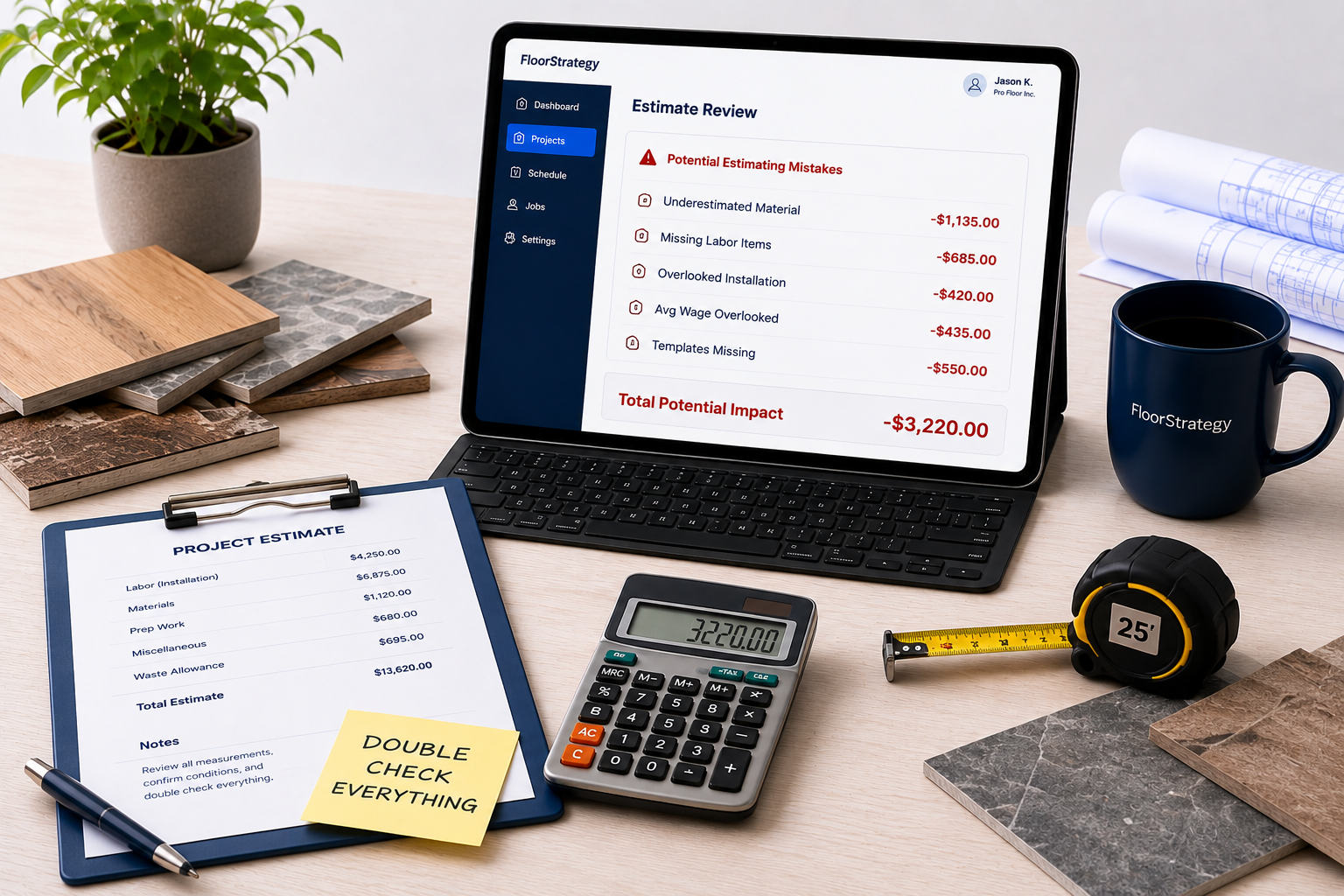
Think about what actually happens during a fast estimate. Square footage gets pulled quickly, sometimes from a quick walk through instead of an actual measurement. Material is priced off memory or last month's invoice instead of a current quote, the same shortcut that leads to guessing at waste instead of tracking it. Labor gets estimated using a rough per square foot number that was probably accurate two years ago but hasn't been checked since, which is usually a sign your labor rate itself needs a second look. None of these are big mistakes on their own. Stack three or four of them on one job and you've got a bid that looks fine on paper and loses money in the field.
The simple jobs get hurt the worst
The jobs that get hurt worst by this are usually the ones that look simple. A straightforward room isn't seen as risky, so nobody double checks it. But simple jobs are exactly where a fast estimator will round a number instead of confirming it, because it feels obvious. Complicated jobs actually tend to get more scrutiny, ironically, because everyone already knows to be careful.
You don't have to choose
You don't have to choose between fast and accurate if you fix the right part of the process. Most of the time is lost recalculating things that shouldn't need recalculating. Square footage. Material pricing. Labor rates by job type. If those numbers are already correct and just sitting there ready to use, your estimator can move fast because they're not guessing, they're pulling from something reliable.
This is the whole point behind the takeoff tools and the pricing setup in FloorStrategy. The goal isn't to slow estimators down with more steps. It's to make sure the fast path and the accurate path are the same path.
FloorStrategy keeps your square footage, material pricing, and labor rates ready to pull from instead of recalculated on every bid, so fast and accurate become the same estimate. Free until July 22.
FAQ
Why does a fast estimate sometimes lose money? Speed usually means pulling square footage from a quick walk through, pricing material from memory, and using a labor rate that hasn't been checked in years. None of those mistakes look big alone, but stacked on one job they can wipe out the margin.
Which jobs are most at risk from a rushed estimate? Simple looking jobs, ironically. Nobody double checks a straightforward room because it feels obvious, while complicated jobs tend to get more scrutiny by default.
Can an estimate be both fast and accurate? Yes, if the numbers your estimator pulls from, square footage, material pricing, and labor rates, are already correct and ready to use. The time gets lost recalculating things that shouldn't need recalculating in the first place.