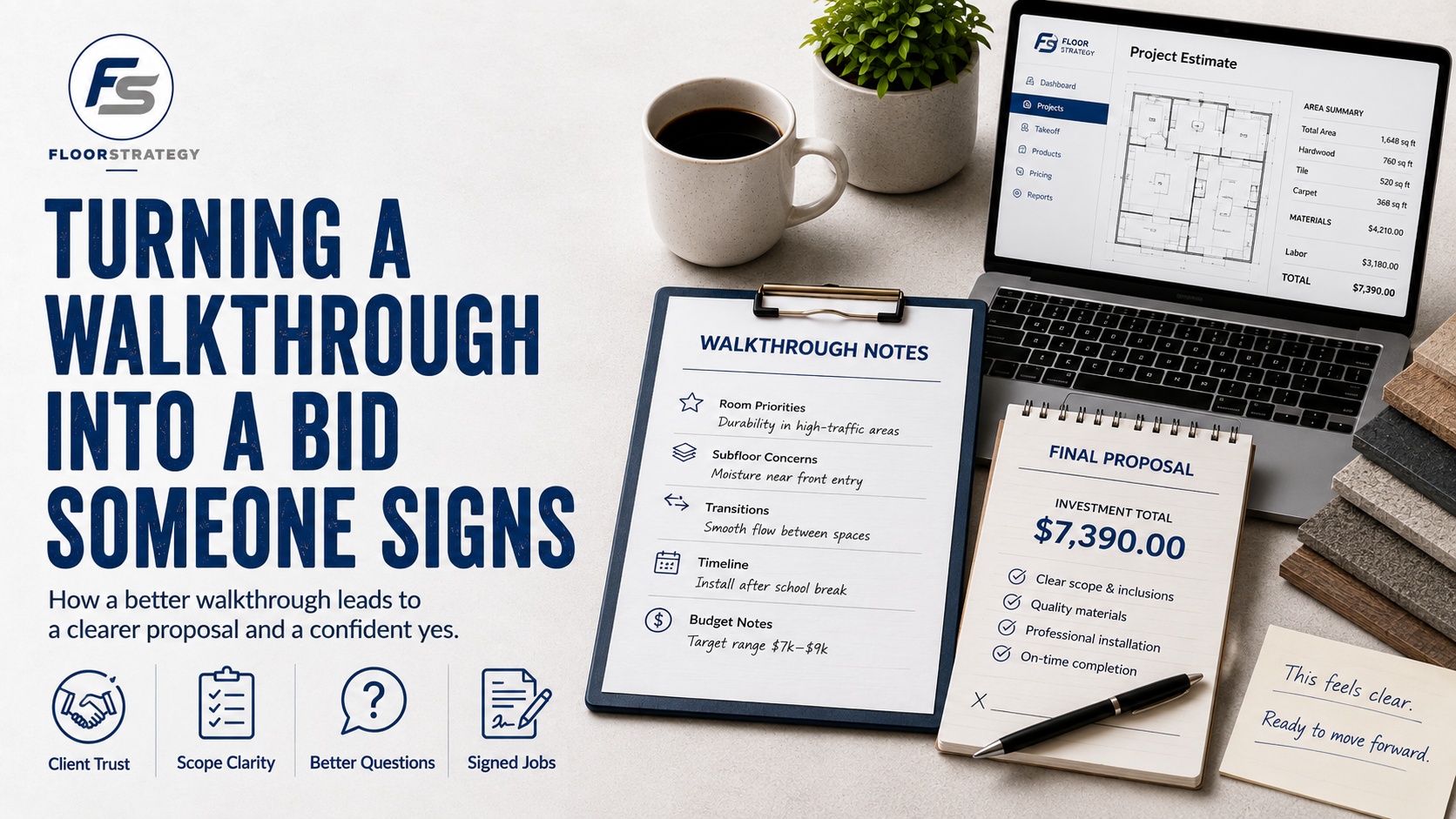
A great walkthrough doesn't guarantee a signed bid. Plenty of shops have a strong in-person conversation with a customer and then send a bid that somehow undersells everything that just happened — and the customer, reasonably, goes quiet.
The disconnect between the conversation and the document
In the room, you're specific: you talked about this material for the living room, that one for the bedrooms, mentioned the installer who'll likely be doing the work, maybe even talked through the timeline. Then the bid arrives and it's a generic line-item template — material, labor, total — with none of the specificity that made the in-person conversation feel personal and considered.
The customer notices the gap, even if they couldn't articulate it. The bid feels like it could've been sent to anyone, because as written, it kind of could've been.
What actually makes a bid feel like a continuation of the conversation, not a form letter
- Match the bid's structure to how you talked about the job. Room by room, in the order you walked through the house, using the same names the customer used for their own spaces ("the playroom," not "bedroom 3").
- Reference specifics from the conversation. If the customer mentioned wanting something durable because of a dog, a line noting the material's durability isn't fluff — it's proof you were actually listening.
- Make the next step obvious. A bid that ends without a clear path to "yes" — no easy way to accept, no next date mentioned — leaves the customer to figure out what happens next on their own. Most people, left to figure it out themselves, just... don't.
- Keep the timeline visible. Even a rough "installers typically have a 2-3 week lead time right now" gives the customer something concrete to plan around, which makes the decision feel real instead of hypothetical.
Why this matters more than the price itself
A customer comparing three bids isn't always comparing three numbers. They're often comparing three experiences of being sold to — and the bid that feels considered, specific, and easy to say yes to has a real advantage over one that's merely cheaper but feels like a template. Price matters, obviously. But a bid that reads like it was actually built for that house, for that family, closes deals that a purely lower number sometimes doesn't.
The takeaway
The walkthrough is where you earn the customer's trust. The bid is where you either honor that or lose it. Treating the bid as just paperwork after the "real" sales work is already done is exactly how a good walkthrough turns into a bid nobody signs.