By Garrett Green, flooring production manager and founder of FloorStrategy
What does "scheduled" actually mean for a flooring job?
It sounds like a simple question. But ask five people at the same flooring business and you might get five slightly different answers. To one person, "scheduled" means a date is on the calendar. To another, it means materials have been confirmed and the installer knows about it. To someone else, it might mean the client has been told.
This isn't a hypothetical problem. When job stages mean different things to different people, jobs slip — not because anyone dropped the ball, but because everyone assumed someone else had already done the part they thought "scheduled" included.
Why Stages Matter More Than They Seem To
A job pipeline is really just a shared definition of what "done" means at each point in a job's life. When everyone agrees on what each stage means — and more importantly, what has to be true before a job moves into that stage — a lot of the ambiguity that causes things to fall through the cracks just disappears.
Here's a practical breakdown of the stages most flooring jobs move through, and what should be true at each one before it moves forward.
Stage 1: Bid Sent
This is the proposal stage — the estimate has gone out, but nothing's been agreed to yet. The job doesn't have committed dates, materials haven't been ordered, and there's no installer assigned. It's a pipeline entry mostly so you can track what's outstanding and follow up on bids that have been sitting too long without a response.
Stage 2: Bid Won
The client has agreed to move forward. This is the moment a bid becomes a job — but "won" doesn't mean "ready." At this stage, what typically still needs to happen includes confirming material availability and lead times, and getting any deposit or paperwork squared away depending on how your business operates.
A job sitting in "won" for too long is a signal worth paying attention to. It usually means something is blocking progress — waiting on the client for something, waiting on a material confirmation — and the longer it sits, the more likely the original timeline slips without anyone deciding that on purpose.
Stage 3: Materials Ordered
Materials have been ordered and a delivery window is known. This stage exists separately from "scheduled" on purpose — because the install date shouldn't get locked in before you know when materials will actually arrive. Scheduling an install for a date before materials are confirmed to be on-site is one of the more common ways a job ends up needing to be rescheduled, which creates exactly the kind of disruption — for the installer and the client — that a pipeline is supposed to help avoid.
Stage 4: Scheduled
This is the stage that should mean: there's a confirmed install date, an installer is assigned, materials will be available by then, and — this part matters — the client has been told. "Scheduled" shouldn't just mean a date exists in your system somewhere. It should mean every party who needs to know about that date actually knows about it.
This is also usually where automatic notifications matter most. When a job moves into "scheduled," that's the trigger point for getting the installer their job details and getting the client their install date — without someone needing to remember to make those calls or send those texts.
Stage 5: In Progress
The install is happening. Depending on the job, this might be a single day or might span a week or more for larger jobs. What matters during this stage is less about the pipeline itself and more about what happens if something changes — if a change order comes up, if there's a delay, if the timeline shifts. Those things should get captured and communicated as they happen, not discovered after the fact when someone asks why the job ran long.
Stage 6: Punch List / Final Walkthrough
The bulk of the work is done, but there are usually small items left — a transition piece, a touch-up, a final cleanup. This stage exists because "the floor is in" and "the job is complete" aren't always the same moment, and treating them as the same thing is how punch list items get forgotten entirely once everyone's attention has moved to the next job.
Stage 7: Complete
The work itself is done and has been confirmed — by the installer, and ideally by the client too. This is distinct from "invoiced" or "paid," which are about the business side of closing out the job rather than the physical work.
Stage 8: Invoiced / Paid
The job is billed and, eventually, paid. Depending on your business, this might be one stage or two. What matters here is that a job doesn't sit in "complete" indefinitely without ever being invoiced — which happens more often than you'd think, usually because attention has already shifted to active jobs and the completed one quietly gets deprioritized.
What Happens Between Stages Matters More Than the Stages Themselves
Here's the thing about any list of stages like this: the stages themselves aren't the hard part. Most flooring businesses could write a list like this from memory, more or less. The hard part is what's supposed to happen when a job moves from one stage to the next — and whether that actually happens consistently.
Does moving to "scheduled" actually trigger the installer notification and the client update? Or does it depend on whoever's managing that job remembering to do it manually that day? Does a job sitting in "bid won" for two weeks get flagged for follow-up, or does it just sit there until someone happens to notice?
This is really where a defined pipeline earns its value — not in the naming of the stages, but in making sure the things that are supposed to happen at each transition actually happen, every time, regardless of how busy that day is.
A Pipeline Is a Shared Definition, Not Just a Tracker
The real value of a clearly defined pipeline isn't that it looks organized. It's that "scheduled" means the same thing whether it's you looking at it, your office manager, or an installer checking their assignments. When everyone's working from the same definition of what each stage means — and what has to be true to get there — a lot of the small miscommunications that eat time and create friction just stop happening.
Want estimates, scheduling, and client communication in one place? Start your free 14-day trial. No credit card required.
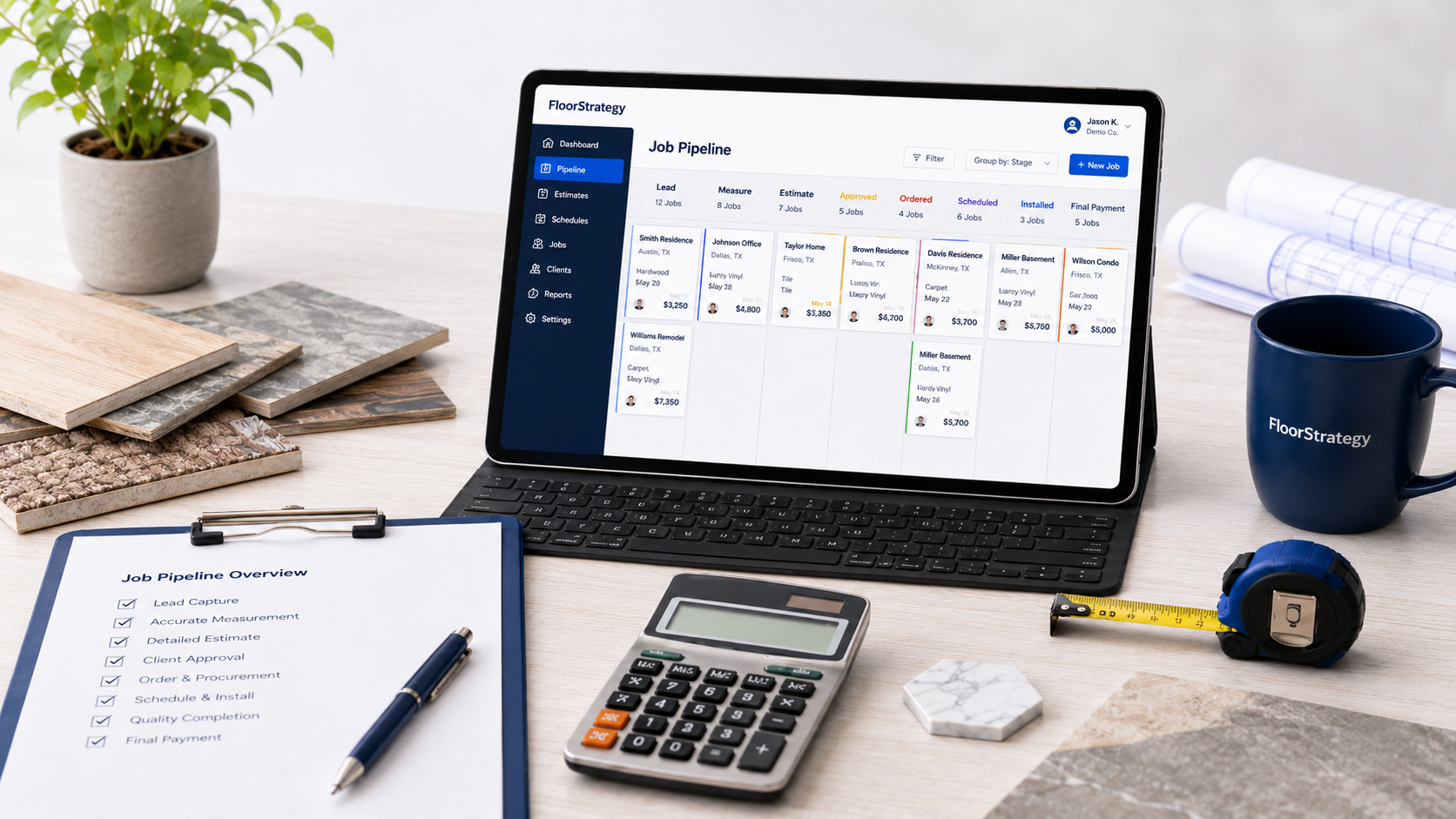
FloorStrategy's job pipeline is built around these stages — with automatic installer and client notifications triggered at the points that matter, so "scheduled" means the same thing every time.