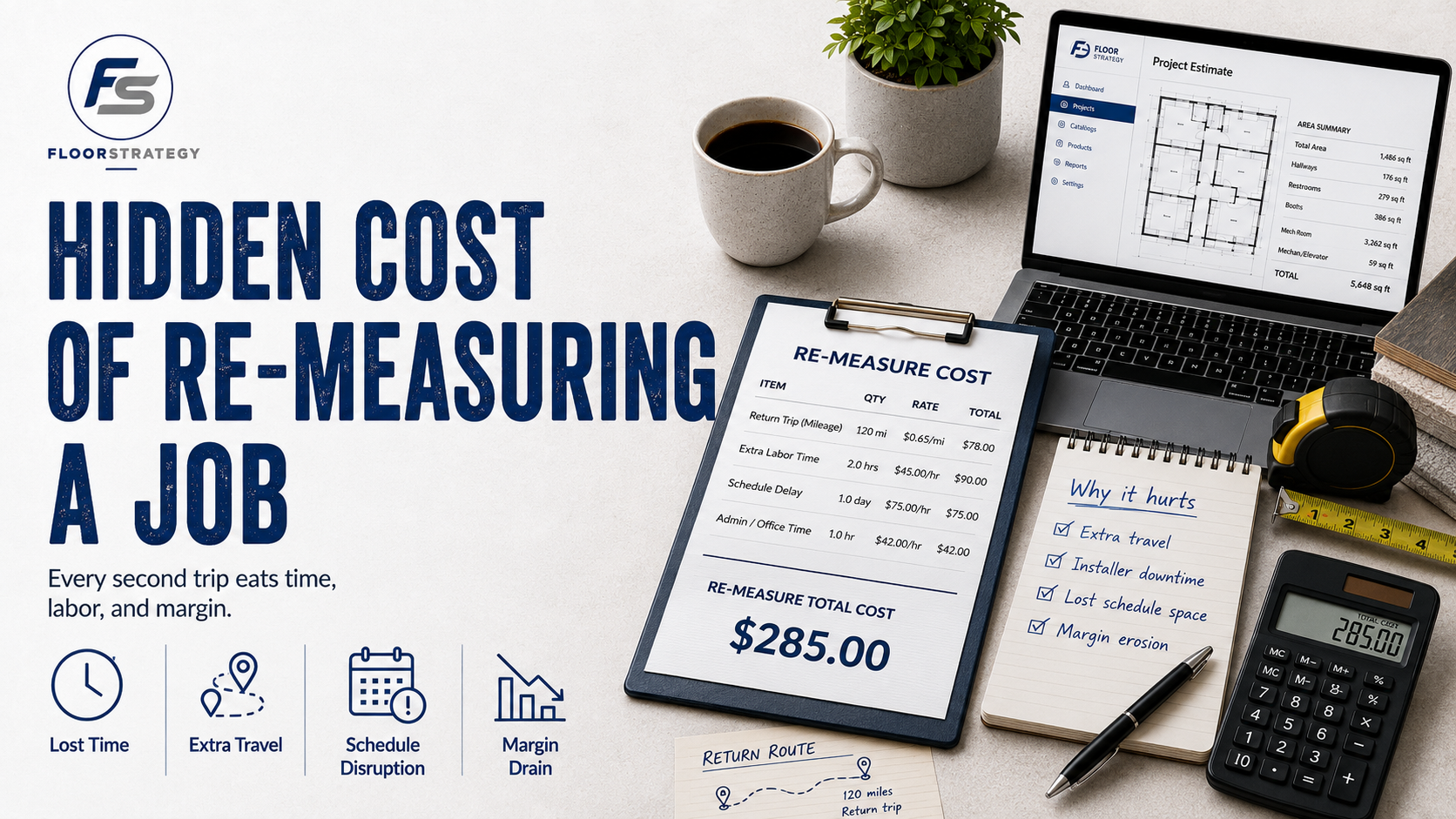
Somebody goes back out to re-measure a job before it starts. On the surface, that looks like a shop being careful. Often, it's actually a shop quietly admitting the first measurement wasn't trusted enough to build a job on — and that costs more than the extra trip.
Why re-measuring happens
Sometimes it's genuinely necessary — a long gap between estimate and install start where site conditions might've changed, or a job complicated enough that a second set of eyes is smart risk management. But a lot of the time, re-measuring happens because the original numbers came from a rushed walkthrough, weren't recorded in enough detail to hand off cleanly, or were done by someone whose numbers the install team has learned not to fully trust.
What it actually costs
The obvious cost is the time — someone's driving back out to a house they've already been to. The less obvious cost is what it says about your process: if re-measuring is a routine step rather than an occasional exception, your estimating process isn't actually producing numbers good enough to build a job on the first time. That's a bigger problem than the wasted trip, because it means every estimate has an invisible asterisk on it.
The version that's actually fine
Not all re-measuring is a red flag. A quick on-site confirmation by the install lead the morning of the job — checking that nothing's changed, confirming material's in the right spot, a five-minute sanity check — is just good practice, not a symptom of anything. The problem is specifically when a full second measurement has to happen because the first one wasn't detailed or trustworthy enough to build from.
How to tell which one you're actually doing
Ask: if the same information had been captured the first time — room by room, with photos, with any site conditions noted — would this second trip have been necessary? If the answer is no, you don't have a re-measuring problem, you have a first-measurement documentation problem, and re-measuring is just the symptom showing up downstream.
The actual fix
It's rarely about measuring more carefully in the moment — most estimators already measure carefully. It's about capturing what was measured in enough detail that anyone on the team could pick it up later and build the job from it without having to go back and see it themselves. Room-by-room breakdowns instead of one lump total, notes on anything unusual (existing flooring, subfloor concerns, furniture that'll need to move), and photos where they're useful. None of that takes meaningfully longer during the original walkthrough. It just turns one person's on-site knowledge into something the whole team can actually use — which is usually cheaper than a second trip, and a lot cheaper than the trust problem a pattern of re-measuring quietly creates.